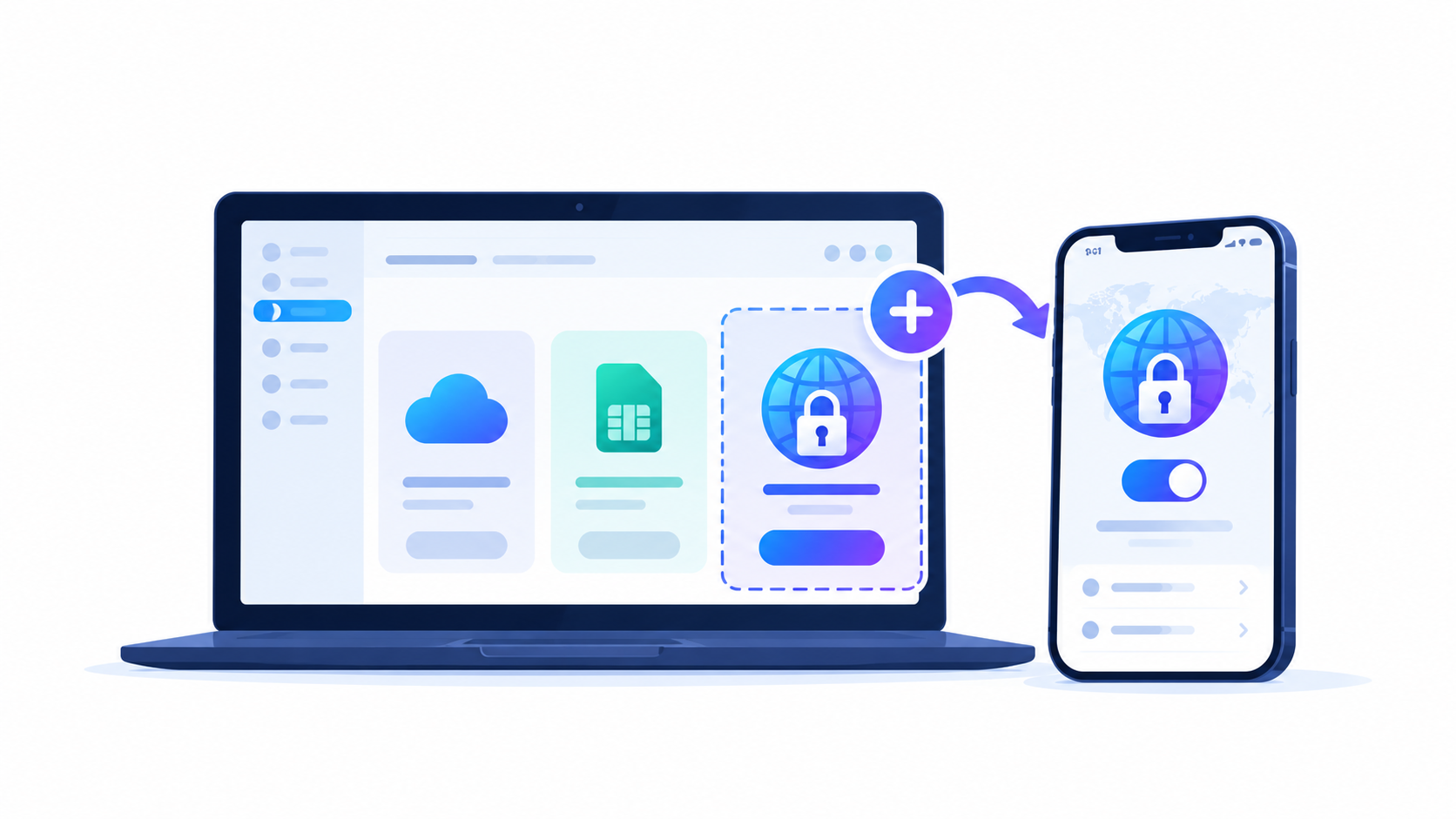
How white label VPNs can expand your digital product line
Instead of building a VPN platform from the ground up, a business can work with an existing white-label VPN provider and launch the service under its own brand.
This lets you focus on positioning, pricing, customers, and growth while the provider handles the agreed technical infrastructure behind the product.
That can make a VPN a practical addition for software businesses, digital agencies, cybersecurity companies, telecom brands, resellers, and entrepreneurs looking to expand an existing product portfolio.
Let’s dig deep and uncover how you can utilize this solution to expand your digital product lines.
What is a white label VPN?
A white label VPN is an existing VPN technology platform that another company can customize and offer under its own brand.
Instead of your customers seeing the infrastructure provider’s name, they see your:
- Brand name
- Logo
- App design
- Pricing
- Subscription options
- Website
- Customer experience
The technology behind the service is provided through an agreed white-label arrangement. This can include server infrastructure, apps, protocols, an admin dashboard, maintenance, and technical support depending on the provider and contract.
This is different than becoming an affiliate.
- An affiliate refers customers to somebody else’s VPN brand.
- A white-label business operates its own branded product experience.
Why add a VPN to your digital product line?
For example, a cybersecurity company may add a VPN alongside security tools. A telecom or digital service provider may include it within a wider subscription package. An agency or software company may launch it as a separate branded service. The benefit is not simply “selling another product.” It is giving existing customers another reason to stay within your product ecosystem.
For more clarity, here are the points described:
You can avoid building the entire VPN backend
Developing a VPN from scratch involves much more than designing an app. You may need server infrastructure, authentication systems, protocol integration, network monitoring, account management, software updates, security testing, and cross-platform development. A white label VPN provider can handle some or all of that technical foundation.
You keep your brand in front of the customer
Brand control is one of the main reasons businesses choose white label. Customers interact with your white label VPN app, not a generic product carrying another company’s identity. Depending on the agreement, customization may include the app name, colors, logo, interface, subscription plans, onboarding, website, and customer-facing communication.
You can add a subscription-based service
VPNs are commonly sold through monthly or longer subscription plans. That gives businesses the option to add recurring billing to their digital product mix. Recurring billing does not mean guaranteed recurring profit. Revenue still depends on pricing, acquisition costs, provider fees, cancellations, refunds, support expenses, payment fees, taxes, and customer retention.
What can a modern white label VPN include?
White-label packages vary widely, so businesses should compare actual deliverables rather than assuming every provider offers the same setup.
A current white-label offering from Symlex VPN describes customizable branding, an admin dashboard, cross-platform applications, server infrastructure, WireGuard, OpenVPN, and V2Ray support, plus features such as a kill switch and split tunneling. Ongoing maintenance and technical support can also be provided according to the service agreement.
Information source: Symlex VPN
| Area | Possible white-label capability |
| Branding | Logo, colors, app name, interface |
| Platforms | Android, iOS, Windows, macOS, and other agreed platforms |
| Protocols | Options such as WireGuard and OpenVPN |
| Privacy tools | Kill switch and split tunneling on supported platforms |
| Infrastructure | VPN servers and backend configuration |
| Admin tools | User, subscription, and performance management |
| Payments | Integration with supported payment systems |
| Support | Maintenance and technical assistance based on agreement |
Important notes: Do not advertise a feature until you know it is included in your own package.
How does a white label VPN launch work?
The exact process changes by provider, but most white label VPN development projects follow a similar path.
| Step | Focus | What happens |
| 1 | Planning | Define audience, platforms, features, and requirements |
| 2 | Branding | Add your name, logo, colors, and design |
| 3 | Infrastructure | Configure servers, protocols, and backend systems |
| 4 | Integration | Connect subscriptions, payments, and admin tools |
| 5 | Testing and launch | Test apps, fix issues, and prepare release |
Important notes:
Don’t rely on fixed promises such as “launch in seven days” unless the provider has reviewed your exact requirements.
How to plan your VPN business costs realistically
The original version of this topic used fixed development prices and projected monthly revenue. Those numbers can quickly become misleading because every project has different requirements. A better VPN business plan starts by identifying the actual cost areas.
Consider:
- White-label provider fees
- Number of supported platforms
- Custom design work
- Extra feature development
- Server requirements
- APIs or SDK integrations
- Payment processing fees
- App store accounts
- Website development
- Customer support
- Advertising
- Content and SEO
- Legal and privacy requirements
- Ongoing maintenance
Important notes:
- Ask the provider for a project-specific quote.
- A lower starting price can become expensive later if every update or integration costs extra.
How to choose features based on your customers
It is easy to create a long feature list because it looks impressive on a landing page. That does not mean customers need all of it. Start with the basics your target users actually value.
That may include simple connections, reliable apps, multiple supported platforms, a kill switch, split tunneling, modern protocols, and straightforward account management. You can add extra features later if they support a real customer need.
Why thinking about scalability is important
Your first hundred customers and your later customer base may create very different operational needs. So ask how the provider handles growth.
Check:
- User capacity
- Infrastructure expansion
- Server management
- Application updates
- Subscription management
- Customer support
- Performance monitoring
- Additional platforms
- Feature upgrades
Your provider should also explain which scaling tasks they manage and which remain your responsibility. Do not assume “scalable” means unlimited capacity without additional costs.
How to choose a white label VPN provider
The provider affects the product your customers eventually experience. Do not choose one based only on a sales presentation. Before signing, ask about:
Factor: Platform support
Confirm exactly which operating systems are included. A provider may support Android and iOS by default but charge separately for Windows, macOS, Linux, TV apps, or other platforms.
Factor: Customization
Ask what can actually be changed. Brand colors and a logo are different from deep interface customization, custom APIs, new features, or unique onboarding.
Factor: Admin controls
Your dashboard should match the level of control your team needs. Ask about users, subscriptions, plans, analytics, server management, access levels, and reporting.
Factor: Support after launch
Find out what happens when an app update breaks something or an operating system changes. Ongoing maintenance matters as much as the initial launch.
Factor: Privacy and compliance
Understand which company processes which data. Clarify how you handle customer data, account information, diagnostics, payment data, retention practices, and your legal responsibilities.
White-label VPN or reseller model? The differences
These models can look similar but serve different business goals. Neither is automatically better. Choose based on your budget, brand goals, technical requirements, and how much control you need. Just avoid the VPN reseller’s mistake if you go for the reselling model.
| White label VPN | VPN reseller |
| Your own branded product | Usually sells an existing VPN service |
| More customization | Faster and simpler setup |
| Greater control over customer experience | Less product development |
| May require larger project scope | Often easier for early-stage sellers |
| Better fit for building a distinct VPN brand | Better fit for straightforward reselling |
Final thoughts
A white label VPN can be a practical way to expand a digital product line without building every part of the technology internally. The strongest opportunity is not a promise of instant revenue. It is the ability to start with established VPN infrastructure and build your own customer-facing product around it. When everything works together, a white-label VPN can become a natural extension of your existing digital business.